You have every right to be skeptical.
Most doctors have heard something bad about a DSO. Some of those stories are true. Here are the questions we get most, answered honestly.

Tell us what matters. We'll build a page around you.
You've got questions. Tell us what you actually want answered and we'll build a page with the specifics.
What matters most to you...Questions doctors ask us. And what we actually say.
No spin. No corporate lines. If you have a question that isn't here, ask it.
Bluetree is doctor-owned and doctor-led. 40+ dentists are shareholders. Doctors sit on the board. Doctors set the direction. We do have a minority private equity partner who provides capital, but they are the minority for a reason - the doctors run the group.
No. Clinical decisions stay with the treating doctor. We do not impose protocols, materials choices, or treatment plans. Ever. Ask any of our doctor-partners. Ask any of our associates.
They stay. Same names, same roles, same pay. The way the practice runs stays the way you built it. What changes is that HR admin, payroll, and benefits paperwork come off their plate.
There isn't a catch. There is a fit check. If you want ownership and we're aligned, you buy in and become a Bluetree shareholder. If we're not aligned, we say so honestly. Every term is on paper. Nothing is a handshake and hope.
The doctors who set the culture are the majority shareholders. They set the rules. If the culture ever changes, it changes because the doctors chose to change it.
What surprised him from the inside.
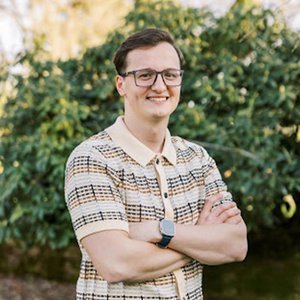
"I definitely had some early hesitations when joining as an associate. I just remembered all the bad things I would hear from people about DSOs in general. But I quickly found out that it is possible to keep that private practice feel because Bluetree does that wonderfully. Bluetree is not just a corporation. We are a group of individuals seeking to provide the best possible care to our patients as a team."
Yelisey Gurzhuy, DDS · Bluetree Partner
The right questions to ask any dental group before you sign.
The DSO industry has grown fast and not all of that growth has been well-executed. Some groups were built to flip in three to five years. Some pursued scale before they had the operational infrastructure to support it. Some are owned entirely by private equity firms with no clinical voice in the room.
You have every right to be skeptical, and the right skepticism is what separates a good decision from a bad one. Ask hard questions about ownership structure. Ask who sets clinical direction. Ask what the growth strategy is and who benefits from it. Ask what happens if the group gets sold to another buyer in three years.
Bluetree Dental is a doctor-owned DSO with 45+ doctor-partners holding the majority. We have a minority private equity partner (Clairvest, joined 2023) that provides capital for growth. Doctors are the majority and doctors lead the group. We were founded by practicing dentists and we are still run by practicing dentists. Our growth strategy is sustainable practice-level economics, not financial engineering built for a resale.
The tough questions about Bluetree Dental.
If you are skeptical about DSOs, ask us these directly. Here are the honest answers.
Is Bluetree owned by private equity?
Bluetree is doctor-owned. 45+ doctor-partners hold the majority of the equity. We do have a minority private equity partner (Clairvest, joined 2023) that provides capital for growth. They provide capital. They do not set clinical direction, hiring decisions, or treatment philosophy.
Is Bluetree built to flip to another buyer in three to five years?
No. The economics are built on practice-level sustainability, not financial engineering for a resale. Doctors hold the majority and doctors decide the group's direction. There is no external pressure to sell on someone else's timeline.
Who actually makes the clinical decisions?
Practicing dentists. The group is led by Brent Corbridge, DMD, MSD. Clinical standards, hiring, and treatment philosophy run through our Chief Clinical Officer Dr. Alan Larkin and the doctor-partner committee.
What happens if the leadership team leaves or the PE partner buys more equity?
The governance structure is set up to keep doctors in the majority. Any change to that ownership structure requires doctor-partner approval. It is not a decision the PE partner can make unilaterally.
How is Bluetree different from Heartland, Aspen, Pacific Dental Services, or MB2?
Ownership structure. Most large DSOs are PE-controlled or fully corporate-owned. Bluetree is doctor-owned with a minority PE partner. Governance model, clinical authority, and long-term strategy all follow from that difference.
Why should I believe you rather than any other DSO pitch?
Read what our actual doctors say. Talk to the people who joined years ago. Ask us for direct introductions to current partners. The proof is in the practices, not the pitch.
What is the worst part of joining Bluetree?
Honest answer: if you want the freedom of solo practice with no group overhead at all, we are not the right fit. Being part of a group means participating in group operations, group standards, and group decisions. That is a real tradeoff. For the doctors who want the group benefits, it is worth it. For the doctors who want complete independence, it is not.